
 Dr. Mark Maybury is the vice president, Commercialization, Engineering & Technology for Lockheed Martin, responsible for leading efforts to commercialize dual-use products and services across the corporation. Dr. Maybury’s prior roles include first chief technology officer for Stanley Black & Decker, Chief Scientist of the U.S. Air Force, Chief Technology and Chief Security Officer at MITRE and Director of the National Cybersecurity FFRDC. He serves on boards and advises Defense Science Board, LMEvolve, AstrisAI, Forward Edge ASIC, Internet Sciences, Halo.Energy, Nano surfaces, and the Advanced Cybersecurity Center. His past board service includes over 30 national studies, READY Robotics, Object Management Group, Air Force Scientific Advisory Board, Intelligence Science Board and Homeland Security S&T Advisory Committee. Dr. Maybury is a Fellow of both the Institute of Electrical and Electronics Engineers (IEEE) and the Association for the Advancement of Artificial Intelligence (AAAI).
 John Graham is a Senior Director at Red Hat with over a decade of experience in engineering leadership, specializing in AI, MLOps, and open source technologies. Currently leading teams in generative and predictive AI development, leveraging expertise in software engineering and data science to deliver innovative solutions. Recent efforts include collaboration with Llama Stack and Agentic AI to enhance Red Hat’s AI capabilities, model serving and AI Safety. Focused on fostering global teamwork and advancing cutting-edge AI engineering practices. Passionate about integrating open source frameworks into scalable, impactful AI systems. Dedicated to enabling organizations to unlock the potential of advanced data-driven technologies through collaboration and innovation.
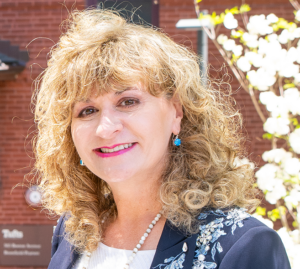 Dr. Karen Panetta received the B.S. degree in computer engineering from Boston University, Boston, MA, USA, and the M.S. and Ph.D. degrees in electrical engineering from Northeastern University, Boston. She is currently the Dean of Graduate Engineering Education and a Professor with the Department of Electrical and Computer Engineering at Tufts University, Medford, MA, USA. She also holds secondary appointments in Computer Science and Mechanical Engineering and a Visiting Faculty appointment in the Tufts School of Dental Medicine. She is the Director of the Panetta Vision and Sensing System Laboratory. Her research interests include developing efficient algorithms for Artificial Intelligence, simulation, modeling, signal, and image processing for biomedical, security and conservation applications.
Karen was the recipient of the 2026 IEEE Mildred Dresselhaus Medal, the 2025 IEEE USA Robert S. Walleigh Distinguished Contributions to Engineering Professionalism Award, the 2023 IEEE-HKN Asad M. Madni award for Outstanding Technical Leadership and Excellence, the 2012 IEEE Ethical Practices Award and the Harriet B. Rigas Award for Outstanding Educator. In 2011, she was awarded the Presidential Award for Engineering and Science Education and Mentoring by U.S. President Obama for her Nerd Girls Program to empower young women in STEM.
Karen was the Vice President of the IEEE Systems, Man and Cybernetics Society. Karen was the 2019 President of IEEE-HKN (Eta Kappa Nu) honor society and 2021- 2022 IEEE Awards Board Chair. She is the Editor-in-Chief of the award-winning IEEE Women in Engineering Magazine. She was the IEEE-USA Vice-President of communications and public affairs and Vice-President of the IEEE Systems, Man and Cybernetics Society. From 2007 to 2009, she served as the Worldwide Director for the IEEE Women in Engineering, overseeing the world’s largest professional organization supporting women in engineering and science. She is the editor-in-chief of the award-winning IEEE WIE Magazine and co-author of the book, “Count Girls In.” Karen is the CEO and Co-founder of Tessera Intelligence Inc. and Co-inventor of the first Digital Twin. She is a Fellow of NAI, IEEE, AAIA, NASA JOVE and AAAS and is a member of the National Academy of Engineering (NAE). Her passion is utilizing her engineering knowledge for the benefit of humanity. Karen has advised world leaders and led humanitarian projects around the globe to change lives, help communities thrive and to protect the environment.