June 11 – 12, 2026
Boston, Massachusetts
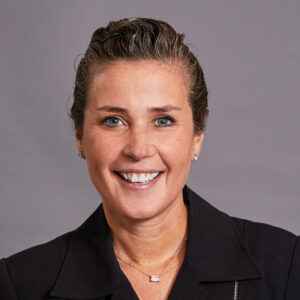
Dr. Stefanie Chiras, Senior Vice President, AI innovation Hub, Red Hat
Stefanie Chiras is Senior Vice President, AI Innovation Hub at Red Hat and holds responsibility for driving Red Hat’s engagement strategy with the rapidly expanding global network of AI innovation hubs. She leads Red Hat’s involvement in an AI Accelerator called The Open Accelerator, a significant collaboration with IBM and the Commonwealth of Massachusetts. As part of this initiative, Stefanie defines Red Hat’s approach to building bridges between academia, startups, investors, and innovators to help foster a vibrant community of AI pioneers. More >>
Dr. Samantika Sury, Vice President, HPE Fellow, Chief Hardware Architect, HPC and AI Solutions, Hewlett Packard Enterprise
Samantika Sury serves as an HPE Fellow, Vice President, and Chief Hardware Architect for HPC and AI Infrastructure Solutions. She leads the Future Technologies team, which focuses on advancing hardware and software system innovations. Her expertise lies in architecting, building, and optimizing systems for HPC and AI. Samantika has previously held prominent roles at Samsung, where she served as Vice President and Chief Hardware Architect for HPC and Vice President of Technology at Samsung Federal Incorporated. She has also worked at Intel® as a Senior Principal Engineer, driving silicon and system architecture innovations into marketable products, served as the Chief Architect of Intel’s HPC-Custom Silicon Program and was the Principal Investigator and Lead Architect for the DOE PathForward Program.
Read more >>
8: Computational modeling of Bispecific T-Cell Engager Targeting B7H3 (CD276) for Immunotherapy in Medulloblastoma presented by Monica Gude (Fort Mill High School); Gaurav Sharma (Eigen Sciences LLC)*
29: DataScribe: An Automated EDA and Narrative Reporting Framework for Accessible Data Analysis presented by Anushree Mishra (KCC ITM)*
35: Synthetic Data for Training & Evaluation in Financial Fraud Detection: A SMOTE-Powered KAN-XGBoost Framework with SHAP Interpretability presented by RAJESH LINGAM (Independent Researcher)*
72: Historical Project and Dependent Task Status Verification-Aware Integration of DEVOPS with AI Using QF-MT presented by Vineeth Billa Kanti (Independent Researcher)*; Likitha Guthikonda (Independent Researcher)
5: Using Deep Learning and Bayesian Optimization for Construction of Optical Coatings for PV Applications presented by Nishikant Sonwalkar (AdaptiveWaves Inc.)*; Siddha Karjee (AdaptiveWaves Inc.)
21: Technological Solution with Machine Learning to Mitigate Labor Informality in MSMEs in Metropolitan Lima presented by Piero Ramirez (Universidad Nacional Mayor de San Marcos); Jose Cjumo (Universidad Nacional Mayor de San Marcos)*; Igor Aguilar (Universidad Nacional Mayor de San Marcos )
23: Trust-Aware Explainable AI for Credit-Card Fraud Detection: An XAI-Driven Decision Support System with SHAP, Counterfactuals and a Trust Index presented by Sushant Gavaraskar (Vishwakarma Institute of Information Technology Pune, India)*
44: Optimized DenseNet-based Approach for Efficient Skin Disease Diagnosis presented by bodoor Aljohani (Taibah University)*; Kawthar Alsayed (Taibah University); Liyakathunisa Syed (Taibah University)
17: Hidden Stylistic Schools of Pre-Islamic Poetry presented by Salem Othman (Wentworth Institute of Technology)*; Youssef Qranfal (Wentworth Institute of Technology)
117: Neural Vision- Language Modeling for Automated Image Caption Generation presented by Reshma Chadaram (Institute of Aeronautical Engineering)*
123: Automated Brain Tumor Segmentation Using Deep Learning and U-Net Architectures presented by Nidhi Sharath (Plano East Senior High School )*
132: On the Geometric Limits of Transformer Defenses against Obfuscation Attacks: Latent Embedding Collapse & Performance–Robustness Gap presented by Becky Mashaido (University of the Pacific); Tapadhir Das (University of the Pacific)*
30: GrievTech: A Predictive AI System for Simulating and Analysing Public Grievance Redressal Workflows presented by Aditri Banerjee (Amity University Noida, Noida Uttar Pradesh)*; Akshit Jain (Amity University Noida, Noida Uttar Pradesh); Anushka Gupta (Amity University Noida, Noida Uttar Pradesh); Richa Sharma (Amity University Noida, Noida Uttar Pradesh); Monica Kaushik (Amity University Noida, Noida Uttar Pradesh)
38: TraceX: Central Finite-Difference Explainability for AI-Based Financial Credit Evaluation presented by Memoona Aziz (Western University Ontario); Muhammad Umair Danish (Western University Ontario)*; Katarina Grolinger (Western University Ontario); Umair Rehman (Western University Ontario)
39: Governance-First Approach for Responsible AI: Integrating Regulation, Policy, and Oversight presented by Vivek Madan (Fo rtinet Inc)*
91: Predictive Quality Engineering in Distributed Data Platforms Using Machine Learning presented by Jay Bharat Mehta (Cleveland State University)*
93: Predicting St. Louis Housing Prices with Machine Learning on Market and Assessor Data presented by Brian Adler (University of Missouri-St. Louis)*; Anne Brown (Washington University in St. Louis)
101: Pattern recognition and prediction with a hidden Markov-linear regression model presented by Ekaterina Vedennikova (University of Latvia)*; Dmitry Gromov (University of Latvia)
144: Self-Evolving AI Systems: Stability–Plasticity Trade-Offs and Regret-Aware Learning in Deployed Machine Learning presented by RAJ KUMAR MYAKALA (CVS Health)*; Vinithya reddy Podduturi (World bank); AKHIL REDDY JAGIRAPU (university of north texas)
157: Multi-modal Causal Reasoning from Sparse Image Datasets: A Synthesis and Discovery Framework presented by Atul Rawal (Towson University)*; Adrienne Raglin (DEVCOM Army Research Lab
46: An Explainable Machine Learning Approach of Detecting Denial of Service Attacks in 5G Networks presented by João Victor Jales Ramos ( Electrical Engineering Department, Federal University of Campina Grande); Matheus Vilarim P. dos Santos (Electrical Engineering Department, Federal University of Campina Grande); Fernando Luiz F. Barros (Electrical Engineering Department, Federal University of Campina Grande); Edmar C. Gurjão (Electrical Engineering Department, Federal University of Campina Grande); Paola Pimentel Furlanetto (Independent Researcher)*
69: Reservoir Computing Based Anomaly Detection in Industrial Control Systems presented by Andre Slonopas (APUS)*; Edward Olbrych (Virginia Polytechnic Institute and State University); Michael Corley (Army National Guard); Jacob Strahan (Huntington Ingalls Industries (HII) )
73: Feature-Driven Zero-Day Malware Detection Using Random Forests presented by Oluwaseyi Olorunshola (Air Force Institute of Technology, Nigeria)*
90: Adaptive NeuroDefense: Graph Neural Network and Reinforcement Learning-Based Self-Healing Cybersecurity Architecture presented by Rohidh S (Paavai College of Engineering)*; Manoj Kumar R ( Paavai College of Engineering); Srinivasan K ( Paavai College of Engineering); Sibirajan D ( Paavai College of Engineering); Sakthivel G ( Paavai College of Engineering); Iniavan G (Paavai College of Engineering)
139: MRI-AgentNet: A Vision Language Models-Based Multi-Agent AI System for Solving Inverse Problems in MRI presented by Gulfam Ahmed Saju (University of Massachusetts Dartmouth); Marjan Akhi (University of Massachusetts Dartmouth); Yuchou Chang (University of Massachusetts Dartmouth)*
140: Quantization and its Effects about Reinforcement Learning on Quantum Neural Network Wrapped in Classical Encoder presented by Jacob Fronzaglia (University of Massachusetts Dartmouth); Yuchou Chang (University of Massachusetts Dartmouth)*; Christopher Hixenbaugh (Naval Undersea Warfare Center Division Newport)
148: Multi-Dimensional Evaluation Framework for Generative AI Applications with Dynamic Data Sources presented by Vishwanath Pattar (Hewlett Packard Enterprise)*
171: Multiplier-Free LLM Linear Layers via Weights-Only Power-of-Two QAT presented by Ikteder Akhand Udoy (Boise State University)*; Omiya Hassan (Boise State University)
113: From Belief to Behavior: Modeling and Tracking Moral Alignment in Autonomous Agents presented by Soraya Partow (Georgia Southwestern state university)*; Satyaki Nan (Georgia Southwestern State University)
127: Mitigating Risks in Agents and Robots presented by Mark Maybury (Lockheed Martin)*
130: Privacy Awareness in Large Language Models: Input Regurgitation and Prompt-Induced Sanitization for HIPAA and GDPR Compliance presented by Aravinda Jatavallabha (Independent Researcher)*; Venkatesha Matam (Independent Researcher); Praveen Kumar Reddy Vavilla (Independent Researcher)
136: Beyond Artificial Certainty: Synthetic Socratic Inquiry for Trust Calibration in AI-Augmented Higher Education presented by Zomana Majid (ReliSource Inc.)*; Wasim Chaudhuri (ReliSource Inc.); Vijay Kanabar (Boston University)
Moderator: Dr. Shahan Nercessian, Senior Applied Researcher, Splice
Shahan Nercessian is a Senior Applied ML Researcher at Splice. He received his B.S., M.S. and Ph.D. in Electrical Engineering from Tufts University in 2007, 2009, and 2012 respectively. In 2012, he became a member of Technical Staff at MIT Lincoln Laboratory. In 2017, he joined iZotope, ultimately becoming their Principal Research Scientist upon merging with Native Instruments. He embarked on his current journey at Splice in 2025, where he develops generative models to bolster Splice’s emerging line of creator-centric AI capabilities. He is also an avid jazz musician and continues to produce and play his own genre-bending original music. More >>
Please click the Track box to view the presentations that will be given for that track.
159: A Novel Multi-Stage Deep Architecture with SIFT-VGG Fusion Net for Muzzle based animal Identification presented by Pranshu Tiwari (AI Thinking Labs)*; Vanshika Mehlawat (BMU); Suyash Patel (North Carolina State University) Pratima K (BMU); Swapnadip Nandi (AI Thinking Labs)
161: Fake News Detection with Deep Learning, Fine-Tuned Transformers, and LLM-Generated Rationales presented by Malithi Mithsara (Southern Illinois university)*; Ning Yang (Southern Illinois University); Abdur Shahid (Southern Illinois University); Zhong Chen (Southern Illinois University)
180: Optimizing Lexicon Design for Micro-Resource Code-Mixed Disfluent Speech Recognition presented by Anuran Mitra (Jadavpur University); Tapabrata Mondal (Jadavpur University); Sivaji Bandyopadhyay (Jadavpur University)*
181: DeepDetect: Learning All-in-One Dense Keypoints presented by Shaharyar Ahmed Khan Tareen (University of Houston)*; Filza Khan Tareen (National University of Sciences and Technology); Xiaojing Yuan (University of Houston)
100: GCARA: A Real-Time AI-Driven Platform for Global Crisis Anticipation and Response Across Four Domains with AI Insights presented by Dr.T. Aravind (Vel Tech Rangarajan Dr.Sagunthala R&D Institute of Science and Technology); Maneesh Ganesula (Vel Tech Rangarajan Dr.Sagunthala R&D Institute of Science and Technology); Konda Mani Chandana (Vel Tech Rangarajan Dr. Sagunthala R&D Institute of Science and Technology)*
108: ROSA-UAV: Integrating Natural Language Model with Autonomous Drone Navigation Systems Safety Critic Control presented by DEOKJIN LEE (Jeonbuk National University)*; Jacob Lee (Department of Computer Information Technology Austin Community College); Afaq Ahmed (Jeonbuk National University); Hassan Eesaar (Jeonbuk National University)
124: Explainable Customer Churn Prediction with Gradient Boosting, SHAP Insights, and Business-Aware Thresholding presented by Trishita Dhara (Upper Hand)*; Siddhesh Sheth (Ace Rent a Car); Aishwarya Budhkar (Indiana University)
125: Adaptive CTGAN: Data Augmentation for Imbalanced Cybersecurity Datasets presented by Devcharan Krishna Naik (University of Massachusetts Dartmouth); Yuchou Chang (University of Massachusetts Dartmouth)*; Ashokkumar Patel (University of Massachusetts Dartmouth)
209: Quantum-Hybrid Deep Learning Ensemble for Credit Card Fraud Detection presented by Tanay Patel (Arizona State University)*; Todd Hodges (American Express Co.); Glen Uehara (Arizona State University); Sutapa Samanta (American Express Co.); Dagen Wang (American Express Co.); Andras Ferenczi (American Express Co.); Andreas Spanias (Arizona State University)
210: When Does Quantum Computing Provide Advantage for Malware Detection? Structural Complexity and the Intermediate Complexity Window presented by Nicholas Carducci (Monmouth University)*
230: Machine Learning for Pakistan Stock Exchange (PSX) KSE-100 Index Prediction presented by Vijay Kumar (Brown University)*; Mohsin Raza (Sukkur IBA University); Pooja Hargun (Virtual University of Pakistan)
251: Short-form Text Rewriting with Phi Silica presented by Divya Tadimeti (Microsoft)*; Shawn Pan (Microsoft); Sameera Lanka (Microsoft); Chenghui Zhou (Microsoft); Sadid Hasan (Microsoft)
138: From Scripts to Prompts: How Large Language Models Are Transforming Penetration Testing presented by Eman Alatawi (University of Tabuk); Umar Albalawi (University of Tabuk)*
143: A Unified MLOps Architecture for Reliable Deployment of Generative AI Systems presented by Vasanth Rao Jadav (EPAM Systems)*; Shravya Bussari (HCL Tech)
155: Augmenting Large Language Models with Causal Risk Patterns for AI Deployment Risk Assessment presented by Gareth Mcconomy (Ulster University)*
165: VAST-Blockchain: Hybrid Ledger Anchoring for Verifiable Governance and Auditability of Aligned AI presented by Soraya Partow (Georgia Southwestern State University)*; Satyaki Nan (Georgia Southwestern State University)
Instructor: Brian McCarthy
Brian McCarthy is a Senior Solutions Architect at AWS, specializing in research computing and AI/ML. He partners with academic and research institutions to design cloud architectures for high-performance computing, machine learning, and data-intensive workloads. McCarthy has presented at AWS re:Invent and regional technology conferences and has published on topics including HPC and resilient cloud architectures. He holds a Bachelor of Science in Chemical Engineering from the University of Massachusetts Amherst.
Instructor: Aditya Singh
Aditya Singh is an AI/ML Specialist Solutions Architect at AWS, where he helps higher education and state/local government organizations adopt generative AI and machine learning platforms. Prior to AWS, he developed large-scale AI systems in financial services. Aditya has served as an instructor at George Mason University and contributed as a technical reviewer for the SciPy Conference. He holds a Master’s degree in Computer Science with a Machine Learning specialization from George Mason University. More >>

Dr. Anthony Vetro, IEEE Fellow, President & CEO, Mitsubishi Electric Research Labs (MERL), Deputy Head of Corporate R&D for Mitsubishi Electric Corporation, Mitsubishi Electric
Anthony Vetro is the President & CEO of Mitsubishi Electric Research Labs (MERL) in the US and serves a dual role as the Deputy Head of Corporate R&D for Mitsubishi Electric Corporation. In his 30 years with MERL, he has contributed to strategic R&D directions of the company, led teams in a variety of emerging technology areas, and has contributed to the transfer and development of several technologies to commercial products. He has also been active in various IEEE conferences, technical committees, and editorial boards. He is currently serving as Industry Board Chair and as a member of the Board of Governors of the IEEE Signal Processing Society. Dr. Vetro received the B.S., M.S., and Ph.D. degrees in Electrical Engineering from New York University. He received several awards for his work on transcoding and is an IEEE Fellow. Read more >>
Christine Miyachi, Principal Software Development Manager and Systems Architect, Microsoft
Christine Miyachi has almost 30 years of experience working for startups and large corporations. Currently she is a Principal Software Engineering Manager in the Cloud+AI division at Microsoft where she works in the Health and Life Sciences division. She holds two MIT degrees: an MS in technology and policy/electrical engineering and computer science and an MS in System Design and Management t. See more about Chris at www.christinemiyachi.com. Chris was the past Chair of IEEE Future Directions and currently leads the IEEE AI Coalition. Fun fact: She has run 30+ marathons and will go for her eighth world marathon star medal in South Africa this year. Read more >>
Please click the Track box to view the presentations that will be given for that track.
189: Validation-Conditioned Dynamic Ensemble Regression with Applications in Biomedical Data presented by Brandon Warner (Verseon International Corp.)*; Edward Ratner (Verseon International Corp.); Elliot Farmer Garcia (Verseon International Corp.)
194: Can Physics-Informed Neural Networks Learn Regulatory Compliance Bounds? Isolating Calibration Drift in Smart Heat Meters presented by Gideon Mbiydzenyuy (University of Borås)*; Fimon Yacob (Ekkono Solutions); Saleh Javadi (Blekinge Institute of Technology)
198: ULAF: Learnable Geometry Activation for Deep Neural Networks presented by Saikatesh Dash (TEKsystems Inc.)*; Sradhanjali Paty (Intone Networks Inc.); Elif Kongar (University of New Haven)
201: Topological Data Analysis Integrated with Deep Sequence Models for Multivariate Time Series-based Solar Flare Prediction presented by Syed Abrab Mahmood (University of Massachusetts Lowell)*; Ruizhe Ma ( University of Massachusetts Lowell)
128: Privacy-Preserving Federated AI on Blockchain for Secure and Compliant Banking Data Management presented by Vineeth Lakkadi (University of the Cumberlands)*; Praneetha Reddy Donthi (University of the Cumberlands); Sravani Kandula (University of the Cumberlands); Munish Kumar (University of the Cumberlands)
145: HAGS: A Hand and Glove Segmentation Dataset for Collaborative Assembly presented by Shivansh Sharma (The University of Texas at Austin); Mathew Huang (The University of Texas at Austin); Sanat Nair (The University of Texas at Austin); Alan Wen (The University of Texas at Austin); Christina Petlowany (The University of Texas at Austin); J
215: Integrating Graph Neural Networks and Large Language Models for Climate Policy Shock Contagion in Bank Lending Networks presented by Rohit Nimmala (Bank of America); Pavan Nutalapati (Independent Researcher); Jagrut Nimmala (Independent Researcher); Milan Parikh (Independent Researcher); SIVA RAMA KRISHNA varma Bayyavarapu (Independent researcher)*; Tejas Patel (Independent researcher)
149: AI-Based Discovery of Silent Failures in Financial Software: Representation Learning for Semantic Data Integrity in CI Pipelines presented by Tetiana Afanasieva (Koyfin)*
160: Shazam4Code: An explainable method for detecting derivative clones for ensuring code providence presented by Jamie Heller (Tufts University)*; Samuel Guyer (Tufts University, Veracode Inc.)
212: Manual Elasticity Models to Scalable Pricing Intelligence: An Industry Case Study presented by Girish Vasudevan (Vanguard)*
163: Applied AI-Enhanced RF Interference Rejection presented by Rahul Jain (MIT Lincoln Laboratory)*; Pierre Trepagnier (MIT Lincoln Laboratory); Rick Gentile (MIT Lincoln Laboratory); Joey Botero (MIT Lincoln Laboratory); Alexia Schulz (MIT Lincoln Laboratory)
217: Interpretable Transfer Learning for Classifying Exoplanet Atmospheric Stability presented by Beneyaz Begum (University of Central Florida)*; Ramses Ramirez (University of Central Florida)
238: Operationalization of Machine Learning with Serverless Architecture: An Industrial Implementation for Harmonized System Code Prediction presented by Sai Vineeth Kandappa Reddi gari (Schneider Electric Global); Sai Vineeth Kandappa Reddi gari (Schneider Electric Global)*; Santhoshkumar Jagadish (Schneider Electric Global)
206: Coordinate-Driven Random Forests – A Transferable Approach for Graph Data presented by Hansi Kalpana Yasodara Paththini Hetti Arachchige (Colorado State University)*; Anura Jayasumana (Colorado State University)
211: Diagnosing and Mitigating Privacy Risks in Natural Language Interfaces for Sensitive Databases presented by Suli Adeniye (Arizona State University)*; Dominique Roe-Sepowitz (Arizona State University); Arunabha Sen (Arizona State University)
233: The Efficacy of ChatGPT Model GPT-3.5 in Rewriting Bias out of Text while Retaining User Engagement presented by Aarav Daftary (Cambridge Center for International Research)*
Please click the Track box to view the presentations that will be given for that track.
204: Automated Highlight Generation using Deep Learning in Soccer Matches presented by Jenish Kothari (Northeastern University)*; Yash Phalle (Northeastern University)
227: Spectral Learning for Crack and Corrosion Risk Prediction presented by Insha Yaqoob Sheikh (Missouri University of Science and Technology)*; Sarangapani Jagannathan (Missouri University of Science and Technology)
239: Understanding Autonomous Public Safety Drone Operations through Transparent and Interpretable Data Visualization presented by Swarnamouli Majumdar (Zenext AI)*
246: Exploring the Impact of Dataset Statistical Effect Size on Model Performance and Data Sample Size Sufficiency presented by Arya Hatamian (University of California, Riverside); Lionel Levine (UCLA); Haniyeh Ehsani Oskouie (UCLA)*; Majid Sarrafzadeh (UCLA)
105: Forecast to Replenishment: Interpretable Machine Learning for Retail Inventory Optimization presented by marsa rayani (California state university DH)*; Samarasimha Donthireddy (California state university DH); Alireza Izaddoost (California state university DH); Benyamin Ahmadnia (California state university DH)
151: A Systems Engineering Driven Framework for Integrating Large Language Models into Clinical Documentation to Increase Efficiency presented by Anoushka Vijay (Notre Dame High School San Jose CA); Jyotirmay Gadewadikar (Mitre)*
152: Agentic CDNs: A Multi-Agent Architecture for Edge-Native AI Inference and Control presented by Venkata Gopi Kolla (Salesforce Inc)*; Chintan Tank (Salesforce Inc); Luc Giavelli (Salesforce Inc)
154: AI Models for Smart Building Energy Consumption Forecasting Using Survey and Online Weather Data in Kuwait presented by Mohamed Zaki (Australian University)*; Khaled AbuJbara (Australian University)
166: Adoption of Safe and Responsible AI for Streamlining Communication with Verbally Impaired Communities presented by Mahendra Samarawickrama (Meta61)*
243: An Agentic AI Framework for Severity-Driven Fire Risk Mitigation presented by Swarnamouli Majumdar (Concordia University)*
170: Applied Machine Learning for Clinical Risk Assessment of Obstructive Sleep Apnea Using Electronic Health Records presented by Manoj Purohit (Marquette University)*; Octavian Ioachimescu (Department of Medicine Medical College of Wisconsin); Praveen Madiraju (Marquette University)
219: Diversity Under Domain Conditioning: Comparing SimSon and CONSMI for QAC Generation presented by Shahana Shultana (George Mason University ); Shiva Ghaemi (George Mason University ); Farzad Ahmed (George Mason University ); Amarda Shehu (George Mason University ); Daniel Barbara (George Mason University )*
237: AIPC POMA: A Privacy-Preserving On-Device Multi-Agent Architecture for AI PC Workflow Automation presented by Michael Rosenzweig (Intel)*; Sultana Begum (Intel)
222: SearchAny: Agentic Federated Natural Language Analytics over Heterogeneous Enterprise Data Lakes via Self-Driven Exploration and Reflexive Orchestration presented by Jagadish Krishna Pilla (Independent Researcher)*
223: Algorithmic evidence and fair trial rights in EU Criminal Justice presented by Eleni Papargyri (European University of Cyprus)*; Lamprini Papargyri (Stanford University)
240: Keystroke-Free Reformulation: Design and Evaluation of Micro-Rewrite Widgets for Mobile Search presented by VENKATA Raghavendra Swamy Gudipati (Remington College)*; Lokanatha Reddy Gandikota (Verizon Wireless)
Moderator: Dr. Mark Maybury, VP, Lockheed Martin
Dr. Mark Maybury is the vice president, Commercialization, Engineering & Technology for Lockheed Martin, responsible for leading efforts to commercialize dual-use products and services across the corporation. Dr. Maybury’s prior roles include first chief technology officer for Stanley Black & Decker, Chief Scientist of the U.S. Air Force, Chief Technology and Chief Security Officer at MITRE and Director of the National Cybersecurity FFRDC. He serves on boards and advises Defense Science Board, LMEvolve, AstrisAI, Forward Edge ASIC, Internet Sciences, Halo.Energy, Nano surfaces, and the Advanced Cybersecurity Center. His past board service includes over 30 national studies, READY Robotics, Object Management Group, Air Force Scientific Advisory Board, Intelligence Science Board and Homeland Security S&T Advisory Committee. Dr. Maybury is a Fellow of both the Institute of Electrical and Electronics Engineers (IEEE) and the Association for the Advancement of Artificial Intelligence (AAAI). More >>
Moderator: Dr. Mark Maybury, VP, Lockheed Martin
Dr. Mark Maybury is the vice president, Commercialization, Engineering & Technology for Lockheed Martin, responsible for leading efforts to commercialize dual-use products and services across the corporation. Dr. Maybury’s prior roles include first chief technology officer for Stanley Black & Decker, Chief Scientist of the U.S. Air Force, Chief Technology and Chief Security Officer at MITRE and Director of the National Cybersecurity FFRDC. He serves on boards and advises Defense Science Board, LMEvolve, AstrisAI, Forward Edge ASIC, Internet Sciences, Halo.Energy, Nano surfaces, and the Advanced Cybersecurity Center. His past board service includes over 30 national studies, READY Robotics, Object Management Group, Air Force Scientific Advisory Board, Intelligence Science Board and Homeland Security S&T Advisory Committee. Dr. Maybury is a Fellow of both the Institute of Electrical and Electronics Engineers (IEEE) and the Association for the Advancement of Artificial Intelligence (AAAI). More >>
Please click the Track box to view the presentations that will be given for that track.
249: Uncertainty-Aware Forecasting with Shifting Seasonal Matrix Factorization presented by Jacob Munson (Montana State University)*; Breschine Cummins (Montana State University)
250: Multiple Diseases Classification of the Lumbar Spine Using a Hybrid Deep Learning Framework with Clinical Explainability presented by Suhani Gawate (cmt)*
202: Modular Deep Learning for Multivariate Time-Series: Decoupling Imputation and Downstream Tasks presented by Joseph Arul Raj (Kings College London)*; Zina Ibrahim (Kings College London); Linglong Qian (Kings College London)
186: Agent-to-Agent -MCP Architecture for Intelligent Enterprise Payroll Management presented by John Selvaraj Arulappan (ADP Celergo)*; Velu Natarajan (GoodRx); Santosh Vasudevan (Caterpillar)
188: An AI-Enabled Non-Invasive Framework for Early Detection of Oral Cancer presented by fasiha khanam (PVKK Institute of Technology)*; T Baba (PVKK Institute of Technology)
192: Deep Learning Assisted Revitalization of Lung CT Images presented by Mani Ganeshwari Donga (Institute of Aeronautical Engineering)*; Dr. Sreelakshmi Doma (Institute of Aeronautical Engineering); Aishwarya Sonaboina (Institute of Aeronautical Engineering); Sharath Chandra Boorgula (Institute of Aeronautical Engineeri
177: AI Companions for E-commerce: Proactive Customer Question Resolution presented by Lokanatha Reddy Gandikota (Verizon)*; Venkata Raghavendra Swamy Gudipati (Remington University); Sudheer Kumar Aluvala (HCL Tech); Sateeshkumar Ponugoti (Publicis Groupe); Satya Tulasi Ram Konda (Verizon)
174: PromptOps: An End-to-End Architecture for Prompt Engineering Lifecycle Management in Large Language Model Applications presented by Kumar Kasimala (Salesforce Inc)*; Ashok Kumar (Independent Researcher)
178: Real-Time Retrieval-Augmented Meeting Intelligence: Knowledge-Enabled Assistance for Sales and Customer Success presented by Krishna Kishore Pilla (Adobe)*
179: Lightweight and Maintainable Approach for Table Detection presented by varsha venkataraman (newcastle university)*; lei shi (Newcastle University)
190: RAG-Enhanced Explainable AI for Regulatory-Compliant Credit Risk Assessment presented by Aman Goyal (CMU); Jothsna Praveena Pendyala (Clark University)*; Jyoti Sondager (Independent Researcher); Shaozhi Jiang (AI/ML Independent Researcher); Prerak Manish Shah (Northeastern University)
199: Credit Card Fraud Detection Using Machine Learning presented by Fahd AlHaidari (Salem State university)*; Dania Alkhulaifi (Imam Abdulrahman Bin Faisal University); Wafa Hantom (Imam Abdulrahman Bin Faisal University); Ali Bazarah (Stonehill College); Jamal Alhiyafi (Kettering University)
205: Bytes to Threats: Byte-Sequence Transformer For Malware Detection presented by Abdelrahman Eljamal (University of Rhode Island)*; Abdeltawab Hendawi (University of Rhode Island)
197: Nibras: A Non-Invasive EEG Brain–Computer Interface for Assistive Communication in Non-Verbal Individuals presented by Ahmed Ibrahim (Prince Sultan Uiversity)*; Tareq Ghazi (Prince Sultan University); Anas Houri (Prince Sultan University); ElMoatez Billah Nagoudi (Prince Sultan University)
224: Structured Skill Taxonomies vs. Large Language Models: A Comparative Study of Curriculum-Level Skill Inference presented by Yash Pankhania (Northeastern University)*; Nicholas Brown (Northeastern University)
226: Evaluating Large Language Models as Symbolic Music Theory Assessors: A Multi-Metric Approach presented by Chauncey Barnes (North Carolina A&T State University); Kiana Katouzian (North Carolina A&T State University); Ahmad Patooghy (North Carolina A&T State University)*
232: Cache Semantics for LLM Systems: When Caching Helps and When It Silently Breaks Correctness presented by Vinay Soni (IEEE)*; Gajendra Babu Thokala (IEEE); Tejas Pravinbhai Patel (IEEE); Amit Kumar Padhy (University of Illinois Urbana-Champaign); Chandrashekhar Medicherla (IEEE); Viswanathan Ranganathan (IEEE); neha agrawal (none)
229: AI-Based Detection of Financially Incorrect States in Visually Stable Web Dashboards presented by Tetiana Afanasieva (Koyfin)*
245: A Hybrid Cloud Architecture for AI-Driven Business Process Automation in Legacy Enterprise Environments presented by Deepa Patel (Independent Software Consultant)*
247: Machine Learning-based Prediction of Ciprofloxacin Resistance in Escherichia coli Using Antimicrobial Susceptibility Testing Metadata presented by Huanran Yu (Jordan HS)*
248: Benchmarking Hybrid Deep Learning Architectures for Predictive Maintenance in Industry 4.0 presented by Zhengyang Gu (Liveline Technologies)*; Joseph Hernandez (Liveline Technologies); Thomas Cook (Liveline Technologies); John Burtenshaw (Liveline Technologies); Sean Scott (Liveline Technologies); Chris Couch (Liveline Technologies)
234: On The Limits of Predicting Sex-Offense Escalation from Criminal Histories presented by Suli Adeniye (Arizona State University)*; Dominique Roe-Sepowitz (Arizona State University); Arunabha Sen (Arizona State University)
Created and maintained by Ballos Associates